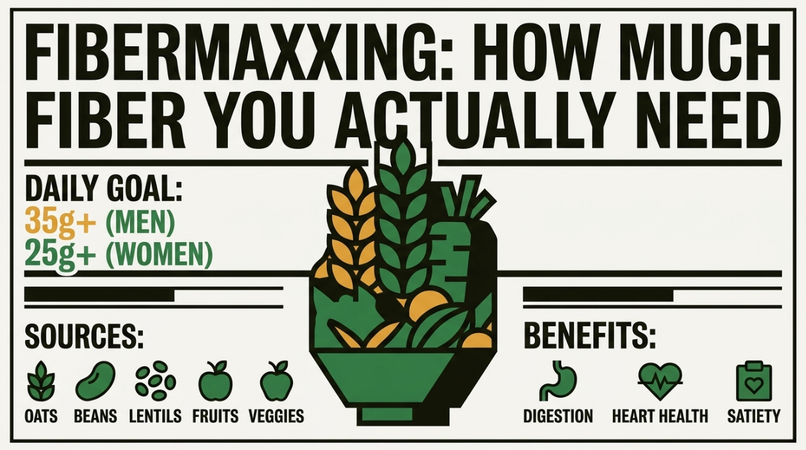
Short answer: fibermaxxing is the 2026 trend of deliberately maximising daily fiber intake, often framed as fiber being the new protein. The underlying advice is sound, because most adults eat roughly half the recommended amount. The target is 25 to 35 g per day, and the best way to get there is food rather than powders.
Why fiber became the trend of 2026
Three things converged. Gut health moved from niche to mainstream. GLP-1 medication use created a large group of people dealing with constipation and needing to eat well in small volumes. And protein had already taught people to track a single nutrient deliberately, so applying the same approach to fiber was an easy next step.
The gap is real. Recommendations sit around 25 g daily for women and 38 g for men, and average intake in most Western countries is closer to 15 g. That is one of the largest and best-documented nutritional shortfalls in the general population.
What fiber actually does
- Satiety. Fiber slows gastric emptying and adds volume without calories, which makes a calorie deficit substantially easier to hold.
- Blood glucose. Soluble fiber slows carbohydrate absorption, blunting the rise after a meal.
- Gut microbiome. Fermentable fiber feeds gut bacteria, producing short-chain fatty acids linked to gut barrier function.
- Digestive regularity. The most immediately noticeable effect, and the reason it matters so much for people on appetite-suppressing medication.
- Long-term health markers. Higher fiber intake is consistently associated with lower cardiovascular and colorectal cancer risk in population research.
Getting to 30 g from food
This is more achievable than people expect once you know which foods carry the load:
- Lentils, cooked, 100 g: about 8 g
- Black beans, cooked, 100 g: about 8 g
- Chia seeds, 25 g: about 8 g
- Raspberries, 100 g: about 7 g
- Oats, dry, 50 g: about 5 g
- Avocado, half: about 5 g
- Wholemeal bread, 2 slices: about 4 g
- Broccoli, 100 g: about 3 g
- Apple with skin, 1 medium: about 3 g
Oats at breakfast, lentils at lunch, a serving of berries and a vegetable at dinner puts you past 25 g without any supplement.
The mistake people make
Going from 15 g to 35 g overnight produces bloating, gas and discomfort, which is why many people conclude fiber does not agree with them and stop. Increase by roughly 5 g per week and raise fluid intake as you go, because fiber needs water to do its job. Rushing this is the most common reason fibermaxxing fails.
The second mistake is reaching for fiber powders and bars first. Whole food delivers fiber alongside micronutrients and a mix of soluble and insoluble types that isolated supplements do not replicate. Supplements are a reasonable gap-filler, not a foundation.
Fiber and protein together
These are complementary rather than competing goals. Lentils, beans, chickpeas and oats supply meaningful amounts of both, which is why they appear in almost every well-constructed diet regardless of the goal. If you are tracking a protein target already, adding a fiber target costs very little extra effort.
Set your protein and calorie targets first, then build the fiber in through your carbohydrate choices rather than treating it as a separate project.
FAQ
How much fiber per day should I eat?
Around 25 g for women and 38 g for men, with 25 to 35 g a reasonable general target. Most adults currently eat about 15 g.
Can you eat too much fiber?
Yes. Very high intakes, particularly increased suddenly, cause bloating and discomfort and can interfere with mineral absorption. Above about 50 g daily there is little added benefit.
Is fiber really the new protein?
It is a marketing frame, but it points at a genuine gap. Unlike protein, where many people already meet their needs, most people genuinely are short on fiber.
Do fiber supplements work?
Psyllium and similar supplements do help with regularity and satiety. They do not replicate the full nutritional package of fiber-rich whole foods.
General information, not medical advice. If you have a digestive condition such as IBS or IBD, changes to fiber intake should be discussed with your clinician.
Work out your own fiber target and a safe weekly ramp with the fiber calculator.
GramGoal Team. We build nutrition calculators and price-check the supplement market monthly. General information, not medical advice. See our methodology and affiliate disclosure.