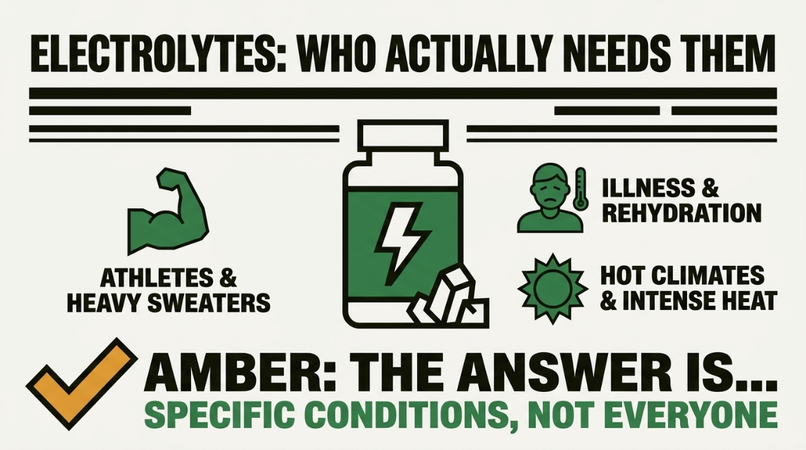
Short answer: electrolytes matter when you lose a lot of them, which mainly means long or intense training, hot conditions, heavy sweating, illness, or eating far less than usual. For a sedentary person eating normal food, an electrolyte sachet is expensive water. The category has grown enormously on marketing rather than on most people needing it.
What electrolytes actually are
They are minerals carrying an electrical charge that regulate fluid balance, nerve signalling and muscle contraction. The ones that matter practically are sodium, potassium, magnesium, calcium and chloride. Sodium is the one you lose most of in sweat and the one most electrolyte products are really selling.
Rough sweat losses per litre
- Sodium: roughly 400 to 1,500 mg, with very large individual variation
- Potassium: roughly 100 to 250 mg
- Magnesium: small, under 50 mg
- Calcium: small
The spread on sodium is the interesting part. Salty sweaters, who often notice white residue on clothing after training, can lose three times what a light sweater loses in the same session. This is why blanket recommendations do not work well.
When supplementation is genuinely useful
- Sessions over about 90 minutes, particularly in heat, where sweat losses accumulate substantially.
- Hot or humid climates, where you sweat heavily even in ordinary daily activity.
- Heavy sweaters, who lose more sodium per litre than average.
- Low food intake, including people using GLP-1 medication, where eating and drinking less reduces mineral intake alongside everything else.
- Illness with vomiting or diarrhoea, the classic clinical use for oral rehydration.
- Very low carbohydrate diets, which increase sodium excretion, particularly in the first weeks.
When it is unnecessary
A 45-minute gym session in an air-conditioned room does not deplete you meaningfully. Neither does a normal working day. Food supplies electrolytes continuously: a banana carries roughly 400 mg of potassium, and ordinary salted food covers sodium for most people without any effort.
The honest summary is that most electrolyte sachets are consumed by people who did not need them, which is a marketing success rather than a physiological one.
The sodium rehabilitation
After decades of blanket advice to cut salt, sodium is being reconsidered for active people specifically. Athletes losing large amounts in sweat have different requirements from a sedentary person with high blood pressure, and the same public health message does not serve both. That nuance is real, and it has also been enthusiastically adopted by brands selling high-sodium products to people who do not train hard.
If you have high blood pressure, kidney disease or heart failure, added sodium is a question for your doctor rather than a supplement label.
Making your own
Commercial sachets typically cost around 1 to 2 USD each. The functional ingredients are inexpensive:
- Roughly a quarter teaspoon of table salt supplies about 575 mg of sodium
- A pinch of lite salt, which contains potassium chloride, adds potassium
- Juice or a small amount of sugar improves taste and aids absorption
- Water to 500 ml to 1 litre
That costs a few cents. Commercial products buy convenience, flavour and consistent dosing, which are legitimate reasons to pay, provided you know that is what you are paying for.
Hydration matters more than electrolytes for most people
Before optimising minerals, cover total fluid. Estimate your daily intake by bodyweight, training and climate. Thirst and pale urine remain more reliable day-to-day guides than any calculation, and for the majority of people adequate water plus normal food solves the problem that electrolyte marketing describes.
FAQ
Do I need electrolytes every day?
Most people do not. Normal food supplies them. Daily use makes more sense in hot climates, with heavy training loads, or when food intake is low.
How much sodium do athletes need?
It depends on sweat rate and sodium concentration, both of which vary widely. Longer sessions in heat can justify 500 to 1,000 mg per hour; shorter indoor sessions rarely do.
Are electrolyte drinks better than water?
For sessions under an hour, no. Beyond about 90 minutes, or in heat, adding sodium helps retain fluid and maintain performance.
Do electrolytes help with cramps?
The evidence is mixed. Cramping is likely multifactorial, involving fatigue and neuromuscular factors alongside hydration status. Electrolytes may help some people and do nothing for others.
General information, not medical advice. Added sodium is not appropriate for everyone, particularly with high blood pressure, kidney or heart conditions.
Measure your own sweat rate and sodium loss.
GramGoal Team. We build nutrition calculators and price-check the supplement market monthly. General information, not medical advice. See our methodology and affiliate disclosure.