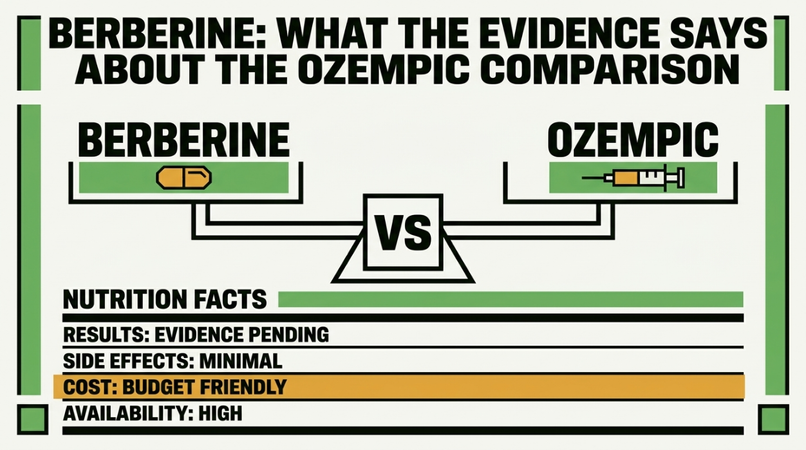
Short answer: berberine is being marketed as natural Ozempic, and that comparison is wrong. It is a plant compound with genuine research behind it for blood glucose and lipid markers, but it works through different mechanisms, produces far smaller weight effects than GLP-1 medication, and carries real drug interactions. Treat it as a supplement with metabolic evidence, not a substitute for a prescription.
Where the Ozempic comparison came from
Berberine went viral on social media as a cheap alternative to GLP-1 drugs. The pharmacology does not support the framing. GLP-1 medications are receptor agonists that dramatically suppress appetite and slow gastric emptying. Berberine primarily activates AMPK, an enzyme involved in cellular energy regulation, with downstream effects on glucose uptake and lipid metabolism.
Those are different mechanisms producing different magnitudes of effect. Trials of berberine typically report modest weight changes over months; GLP-1 trials report substantially larger ones. Calling it natural Ozempic sells product and misleads people about what to expect.
What the research does support
- Blood glucose. The strongest area. Multiple trials and pooled analyses report reductions in fasting glucose and HbA1c in people with type 2 diabetes, with some studies finding effects comparable to metformin. Study quality is mixed and many trials are small and conducted in China.
- Lipids. Reasonable evidence for reductions in LDL cholesterol and triglycerides.
- Weight. Modest, typically a couple of kilograms over three months in trials, often alongside diet changes. Far from what the marketing implies.
- PCOS. Some trials report improvements in insulin resistance markers in women with polycystic ovary syndrome.
The interactions people are not told about
This is the part that matters most and gets the least coverage. Berberine inhibits CYP3A4, a liver enzyme responsible for metabolising a large share of prescription medications. That means it can raise blood levels of other drugs, including some statins, blood thinners, immunosuppressants and blood pressure medications.
It also lowers blood glucose, which stacks with diabetes medication and can push blood sugar too low. Anyone taking prescription medication should treat berberine as a drug interaction question for their doctor or pharmacist rather than a harmless supplement decision.
It is not recommended in pregnancy or breastfeeding, and not for infants.
Practical notes if you and your doctor decide to try it
- Typical trial dose: 500 mg two or three times daily, taken with meals.
- Split doses matter because berberine has poor oral bioavailability and a short half-life.
- Digestive side effects are common at higher doses: cramping, diarrhoea, constipation.
- Give it 8 to 12 weeks before judging metabolic markers.
- It does not replace the basics. Calorie balance, protein intake and resistance training move metabolic health far more than any supplement.
Set your calorie and protein targets first. A supplement layered on top of an unstructured diet is doing the least important job.
FAQ
Is berberine really natural Ozempic?
No. Different mechanism, far smaller weight effects, and different risk profile. The nickname is marketing.
How much weight can you lose on berberine?
Trials typically report a couple of kilograms over three months, usually alongside dietary change. Expect modest results.
Is berberine safe?
Generally tolerated in trials at standard doses, but it has meaningful drug interactions through CYP3A4 inhibition. Anyone on prescription medication needs medical advice first.
Can I take berberine with metformin?
That is specifically a question for your doctor, since both lower blood glucose and the combination needs monitoring.
General information, not medical advice. Berberine interacts with many prescription medicines; speak to your doctor or pharmacist before taking it.
GramGoal Team. We build nutrition calculators and price-check the supplement market monthly. General information, not medical advice. See our methodology and affiliate disclosure.