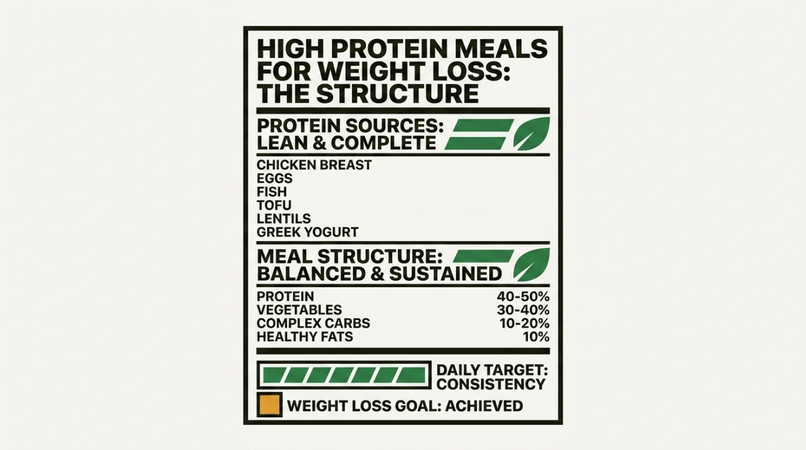
Short answer: a high protein meal for weight loss means 30 to 40 g of complete protein, plenty of volume from vegetables, and enough fibre to stay full, in roughly 400 to 600 calories. The recipe matters far less than hitting that structure, and most recipes marketed as high protein do not.
Split your daily targets across meals.
What makes a meal work in a deficit
Three things, in order of importance.
- Protein, 30 to 40 g. The most satiating macronutrient per calorie, and the one that determines whether the weight you lose is fat or muscle. Below about 25 g the meal also fails to properly trigger muscle protein synthesis. Why that threshold exists.
- Volume. Vegetables, salad, broth. Energy density research consistently finds that people eat a fairly consistent weight of food, so lowering calories per gram is the most reliable way to eat less without feeling deprived.
- Fibre, 8 to 12 g. Slows digestion and adds bulk. Most people are at half the recommendation. Fibre target.
Fat is not the enemy, but it is where meals quietly gain calories. Oil, cheese, nuts and dressings are dense and easy to under-estimate.
Protein per calorie, ranked
This is the table worth internalising. Everything near the top lets you build a filling meal cheaply in calories.
| Food | Per 100 g | Protein | Calories | Protein per 100 kcal |
|---|---|---|---|---|
| White fish, cod | 100 g | 18 g | 82 | 22 g |
| Chicken breast | 100 g | 31 g | 165 | 19 g |
| Prawns | 100 g | 24 g | 99 | 24 g |
| Tuna, canned in water | 100 g | 25 g | 116 | 22 g |
| Egg whites | 100 g | 11 g | 52 | 21 g |
| Greek yogurt 0% | 100 g | 10 g | 59 | 17 g |
| Cottage cheese | 100 g | 11 g | 98 | 11 g |
| Lean beef mince 5% | 100 g | 27 g | 170 | 16 g |
| Tofu, firm | 100 g | 8 g | 76 | 11 g |
| Lentils, cooked | 100 g | 9 g | 116 | 8 g |
| Whole egg | 100 g | 13 g | 143 | 9 g |
Meal templates rather than recipes
Templates beat recipes because you can apply them to whatever is in the fridge.
- Bowl: lean protein + a grain or legume + two vegetables + a sauce measured rather than poured. Around 500 kcal, 35 to 45 g protein.
- Breakfast: eggs or Greek yoghurt as the base + fruit + a small amount of oats or seeds. 350 to 450 kcal, 30 g protein. This is the meal most people get wrong.
- Soup or stew: protein + broth + vegetables + legumes. Very high volume for the calories, which makes it exceptionally filling.
- Stir fry: protein + a large volume of vegetables + measured oil + rice. The oil is where these go wrong; a tablespoon is 120 calories.
- Salad with a real protein serving: 150 g of chicken or fish, not a sprinkle. Dressing measured.
Where high protein recipes usually fail
- The protein serving is too small. A recipe claiming high protein with 15 g per portion is not a high protein meal.
- Hidden fat. Oil, cheese, cream and dressings routinely add 200 to 300 calories to a dish that reads as lean.
- Incomplete protein counted as protein. Collagen and gelatin do not contribute usefully to muscle retention.
- Low volume. A calorie-appropriate meal that fits on a small plate leaves you hungry an hour later.
- Portion drift. The recipe serves four; the eater serves two.
A worked day at 150 g protein
| Meal | Contents | Protein | Calories |
|---|---|---|---|
| Breakfast | 3 eggs, 150 g Greek yogurt, berries | 36 g | 420 |
| Lunch | 150 g chicken, 100 g lentils, large salad | 52 g | 560 |
| Snack | Whey shake with water | 24 g | 120 |
| Dinner | 180 g white fish, potatoes, vegetables | 38 g | 520 |
| Total | 150 g | 1,620 |
That leaves substantial room for fats, extra carbohydrate or a dessert within most people deficit targets. Set your deficit.
FAQ
How much protein should a meal have for weight loss?
30 to 40 g of complete protein for most adults, higher if you are older or larger.
What is the highest protein food per calorie?
White fish, prawns and egg whites sit at the top, above 20 g of protein per 100 calories.
Do I need to eat six small meals?
No. Three to five meals that each clear the protein threshold works better than six that do not.
Are high protein diets safe?
For healthy people, intakes across the studied ranges have not been shown to harm kidney function. Existing kidney disease changes this.
Sources
- Leidy HJ et al. The role of protein in weight loss and maintenance. American Journal of Clinical Nutrition, 2015.
- Rolls BJ. The relationship between dietary energy density and energy intake. Physiology and Behavior, 2009.
- Jager R et al. ISSN Position Stand: protein and exercise. JISSN, 2017.
- Helms ER et al. A systematic review of dietary protein during caloric restriction in resistance trained lean athletes. IJSNEM, 2014.
- US Department of Agriculture. FoodData Central. fdc.nal.usda.gov
General information, not medical advice.
Turn your targets into a shopping list.
GramGoal Team. We build nutrition calculators and price-check the supplement market monthly. General information, not medical advice. See our methodology and affiliate disclosure.